
brookshire
amphitheatre
Collaborators: Project Landscape Architect and Architect: MRS; Structural Engineer: Shear Structural; Contractor: Latitude Construction; Acoustical Engineer: Acustica Design, A/V Consultant: Duck
Client: Cabbagetown Initiative, Cabbagetown Neighborhood Association, Park Pride, ATLParks, Liliana Bakhitiari
Concept: neighborhood porch, heritage skills, storytelling, reviving the riparian, music on the stoop, ecological infrastructure, community amphitheatre, material exploration, public park
Time: Under construction summer 2026
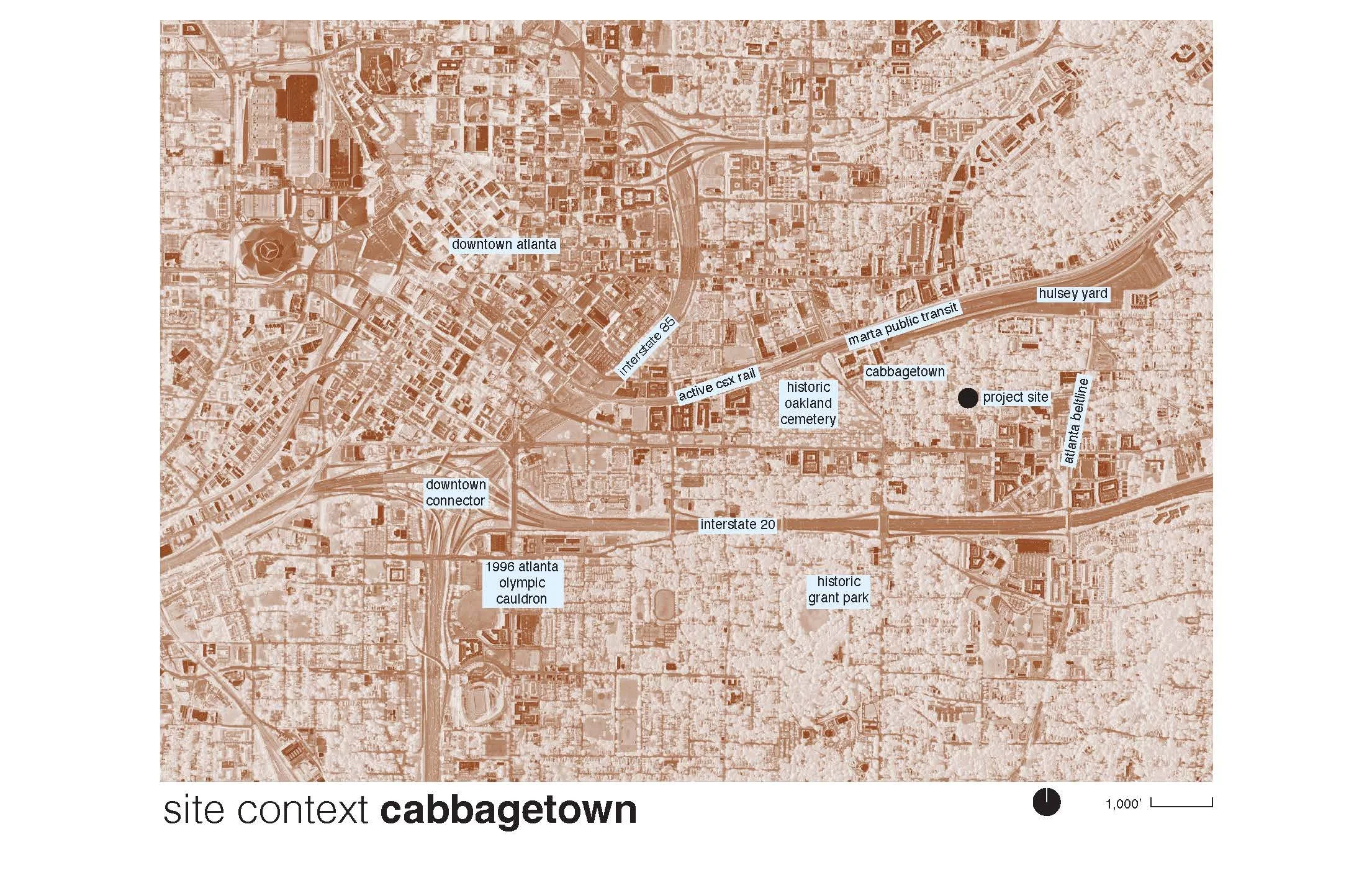
Place: Cabbagetown, Atlanta, Georgia
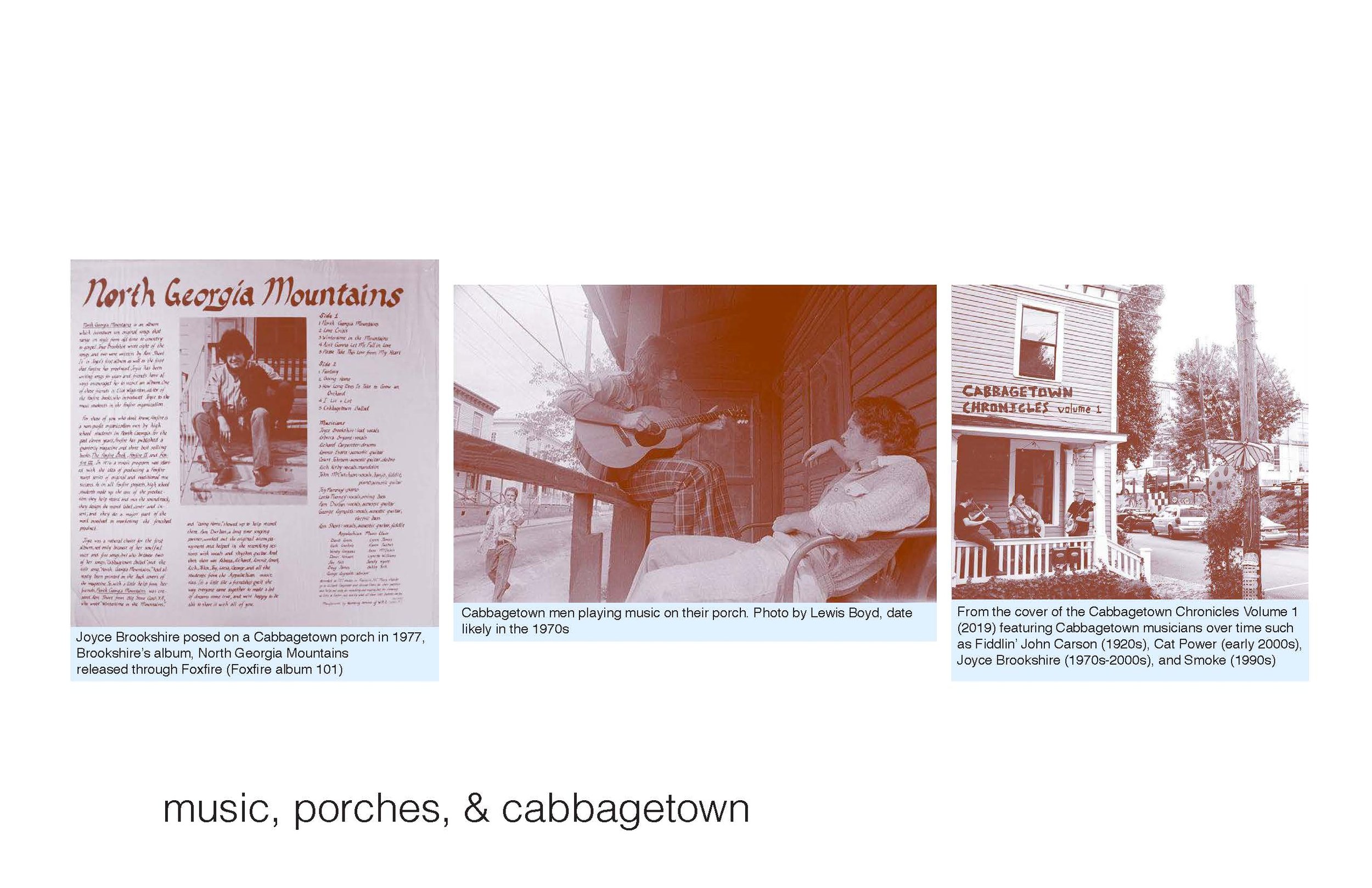
References: Joyce Brookshire’s North Georgia Mountains released through Foxfire (Foxfire album 101), Cabbagetown
Project Context
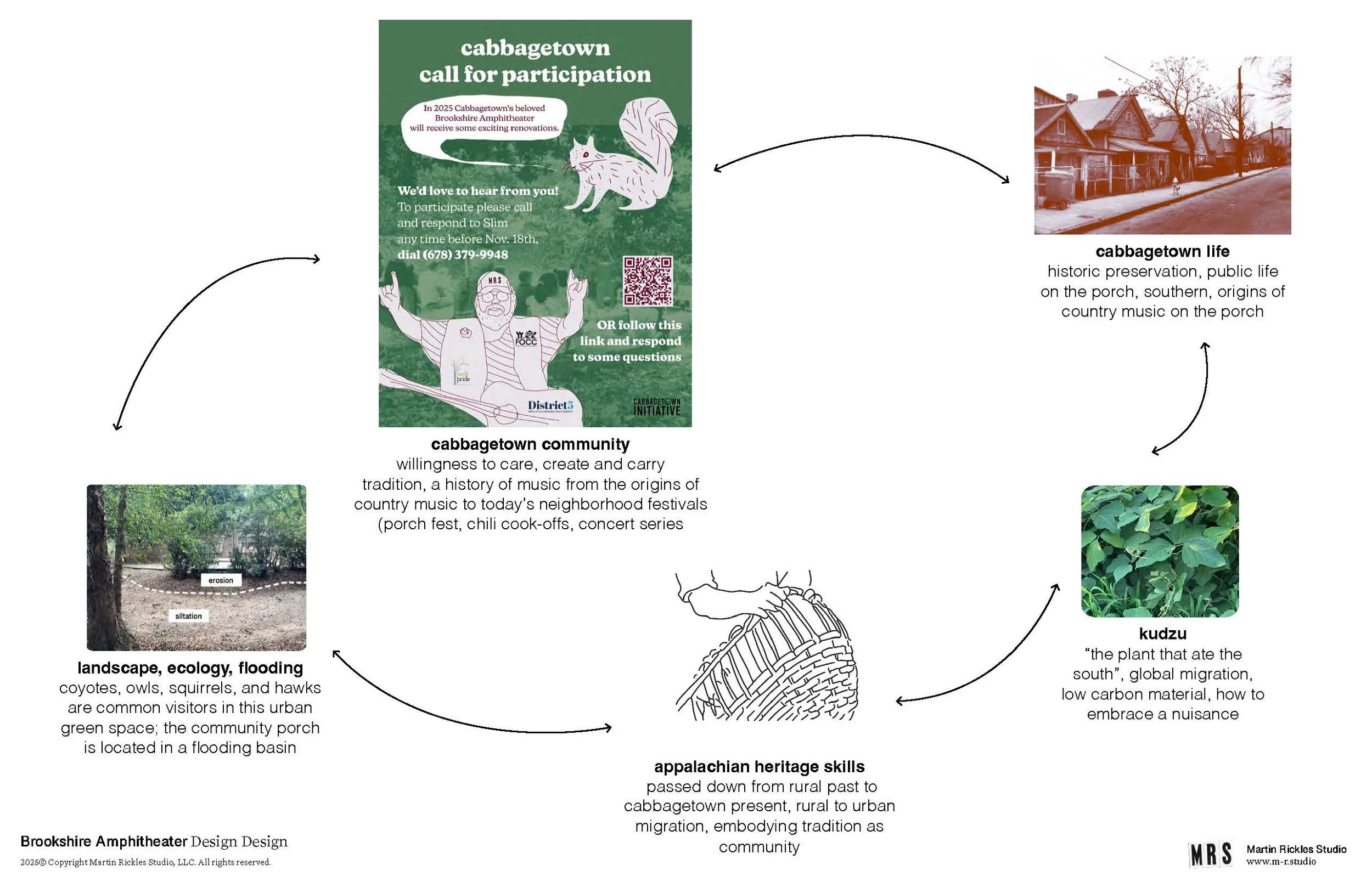
Cabbagetown is an historic Atlanta neighborhood, developed for the Fulton Bag and Cotton Mill (1881-1977). Poor, white laborers were recruited from the Appalachian region of North Georgia, and were housed in densely arranged shotgun and cottage-style homes. Accounts describe the air smelling of food and the sound of music echoing from porches.
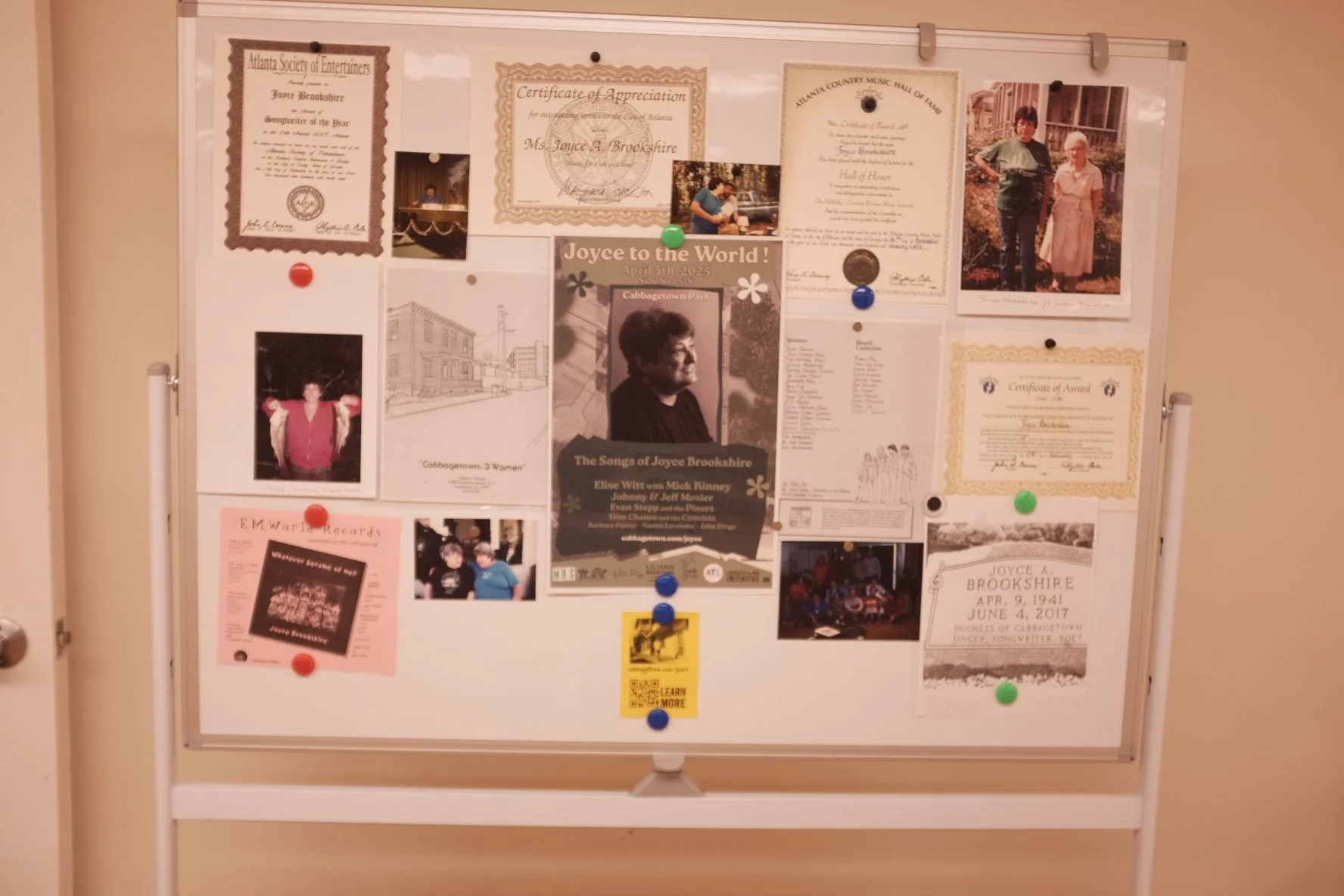
Joyce Brookshire (1942-2017) was a songwriter, vocalist, social justice advocate, and one of Cabbagetown’s last Appalachian emigrants. Joyce is pictured on the back cover of her first album, North Georgia Mountains, sitting on her Cabbagetown porch.
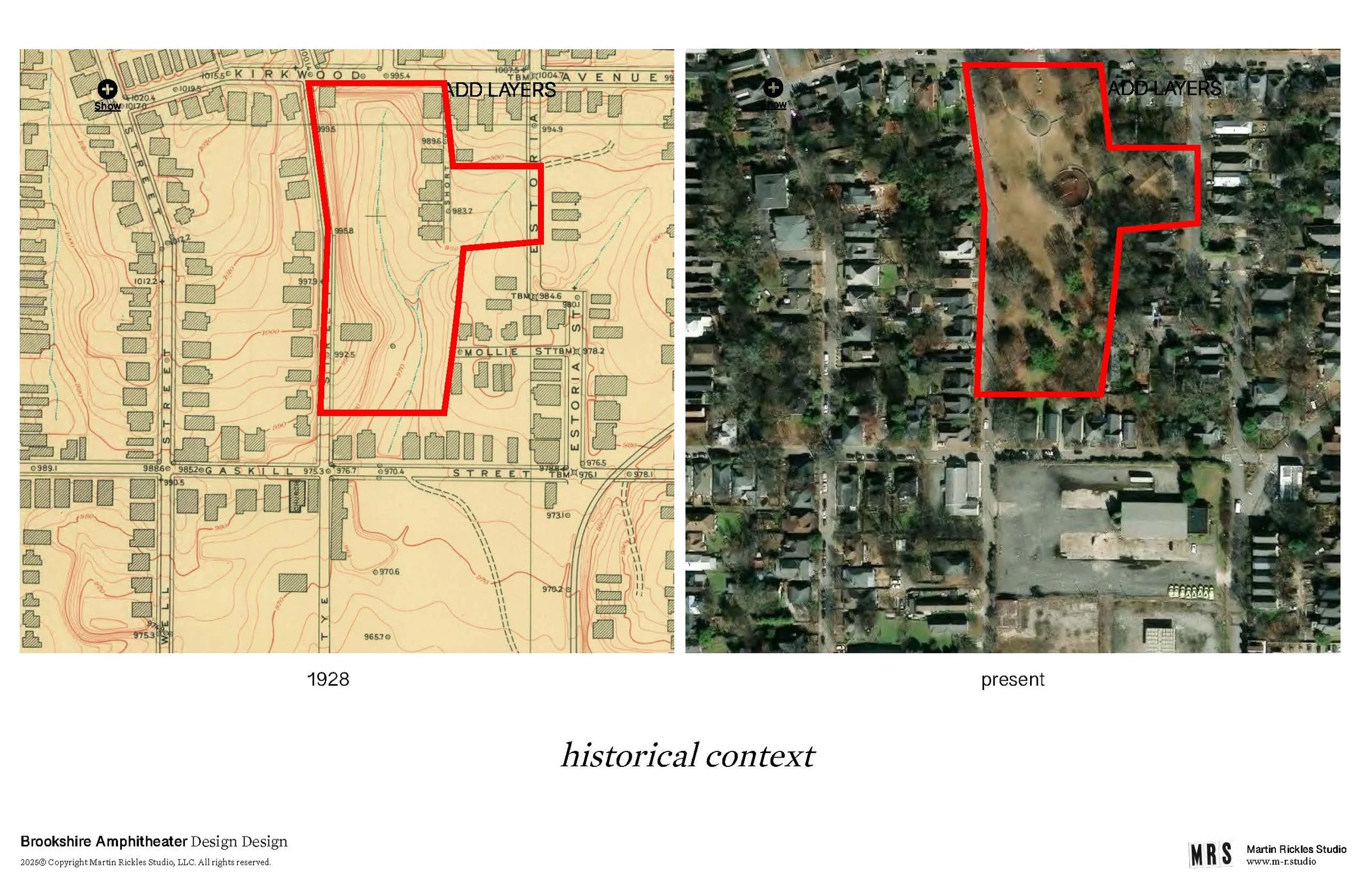
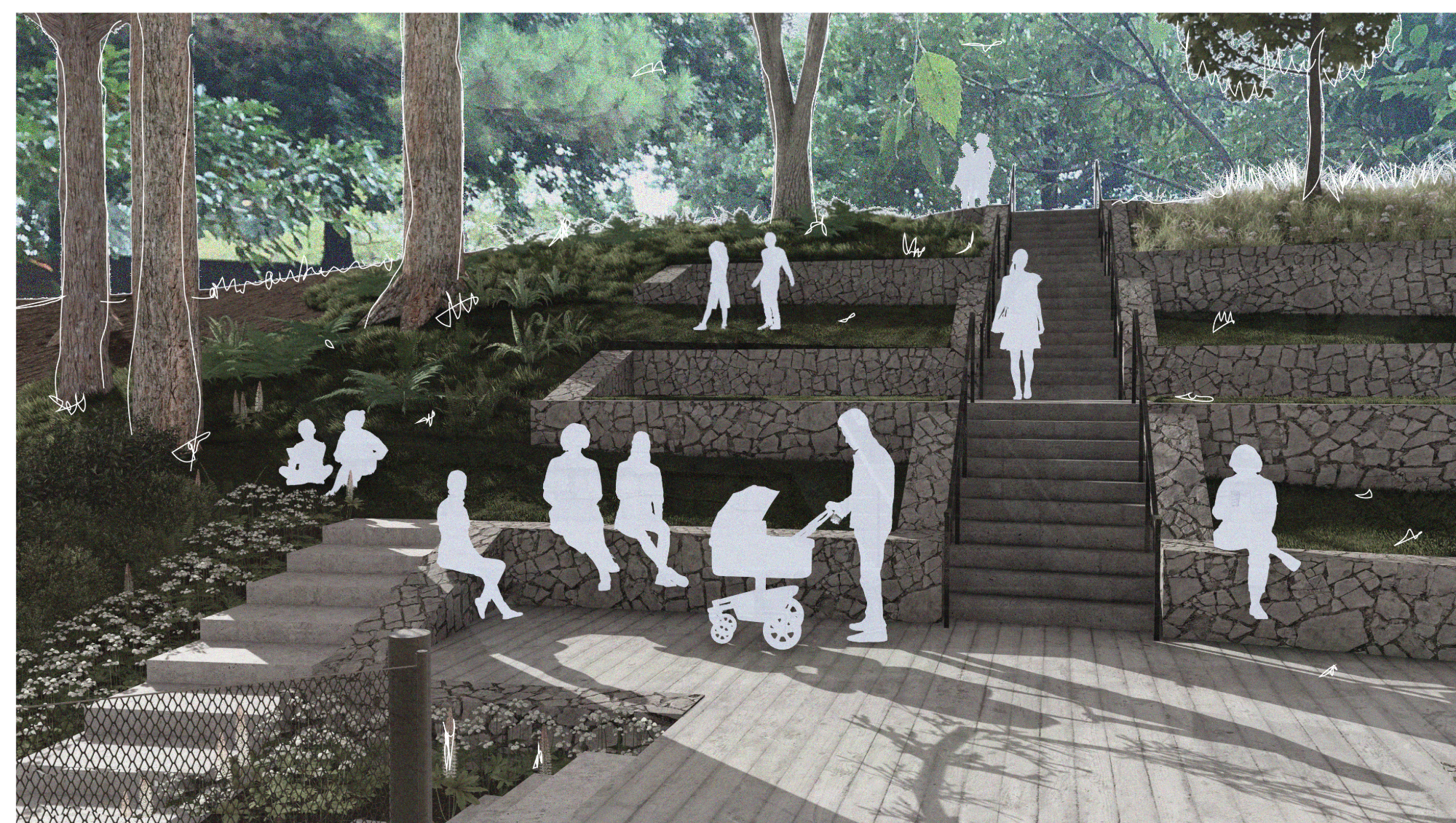
In 2018, the neighborhood amphitheatre was named in Joyce’s honor, along with plans to build a stage and bandshell for community performances. While many of Cabbagetown’s current residents continue to use their porches as semi-public social spaces, Appalachianmusical traditions are increasingly confined to large gatherings like Chomp and Stomp–an annual bluegrass festival and chili cookoff.
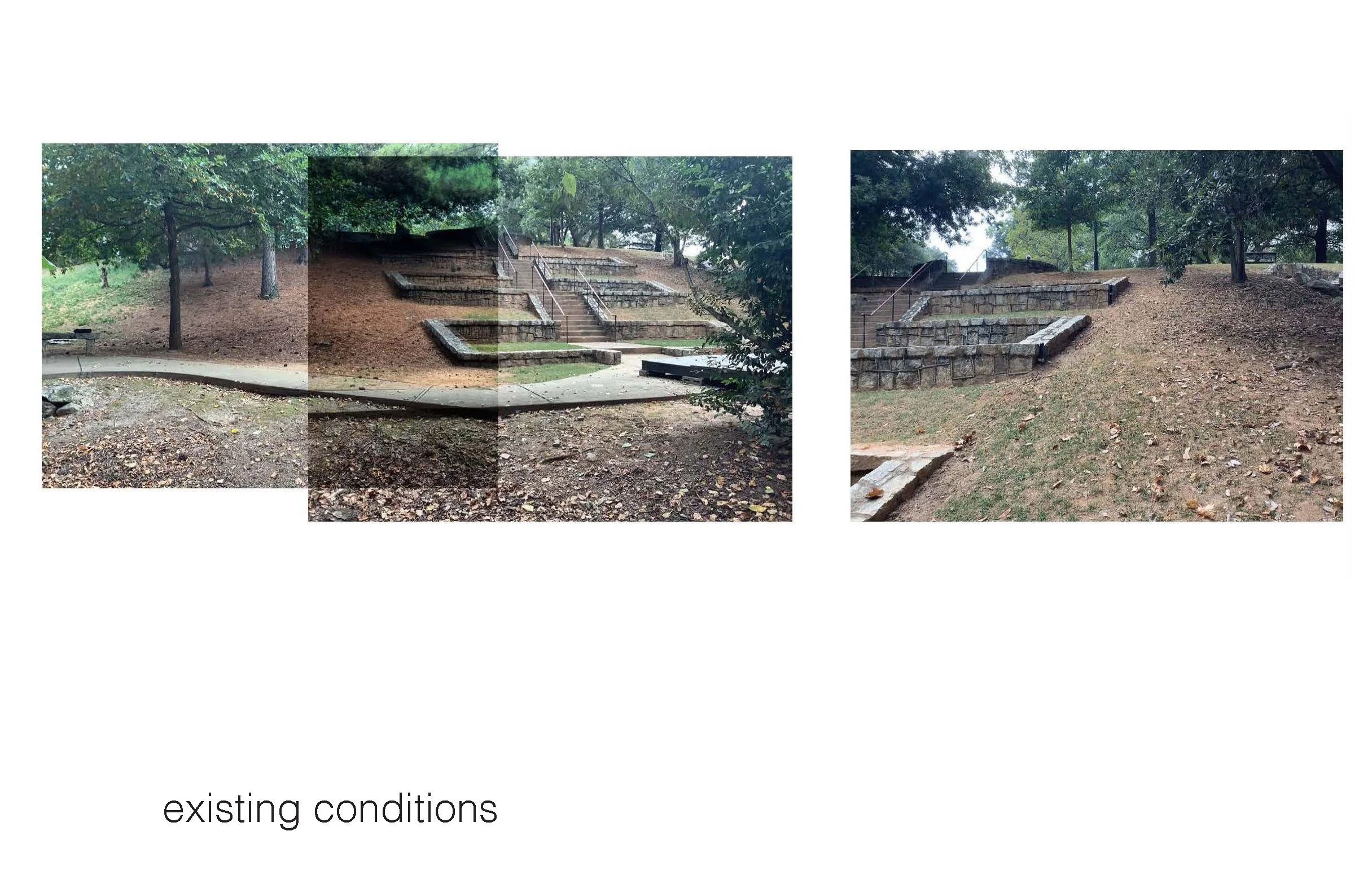
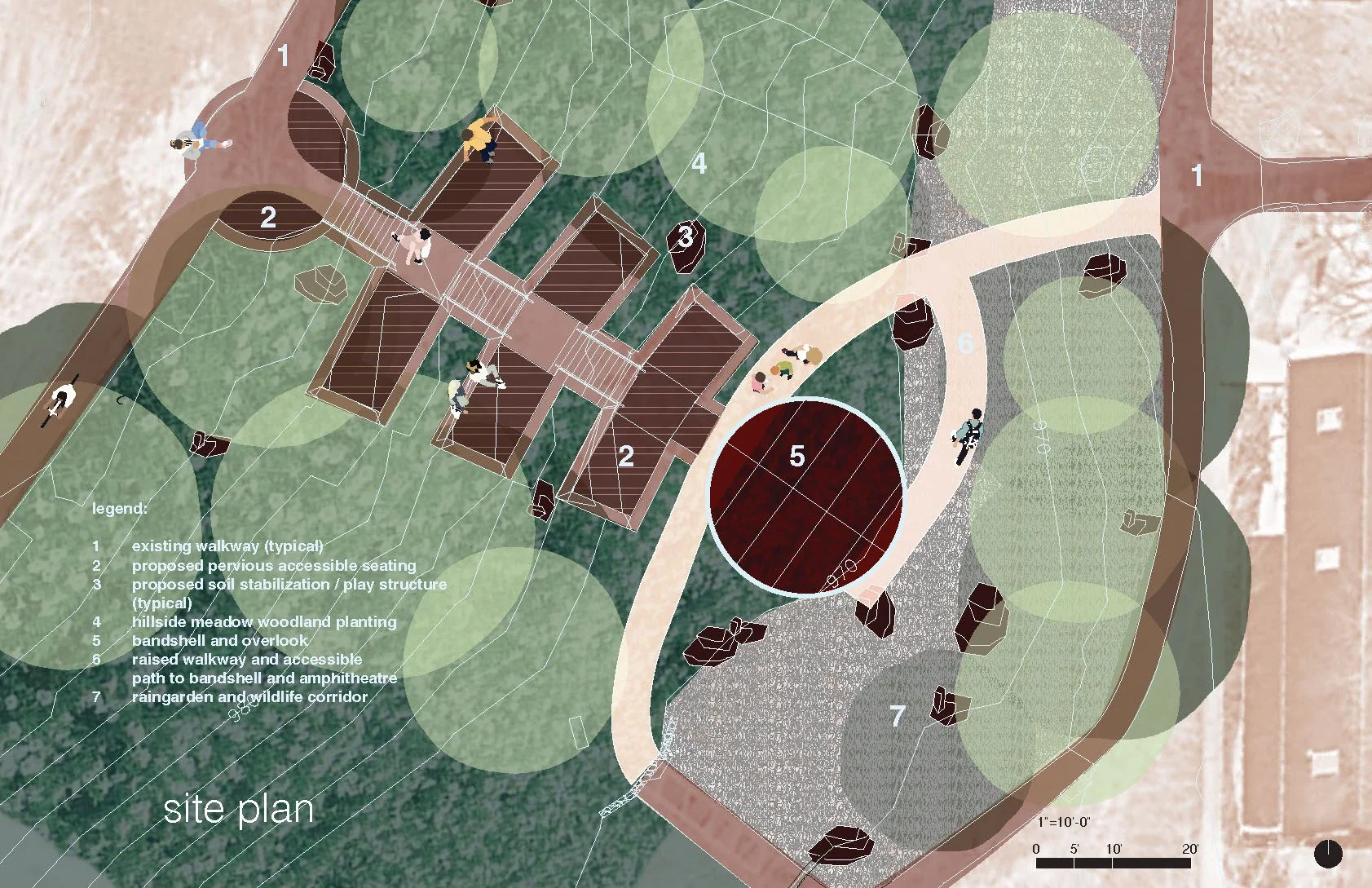
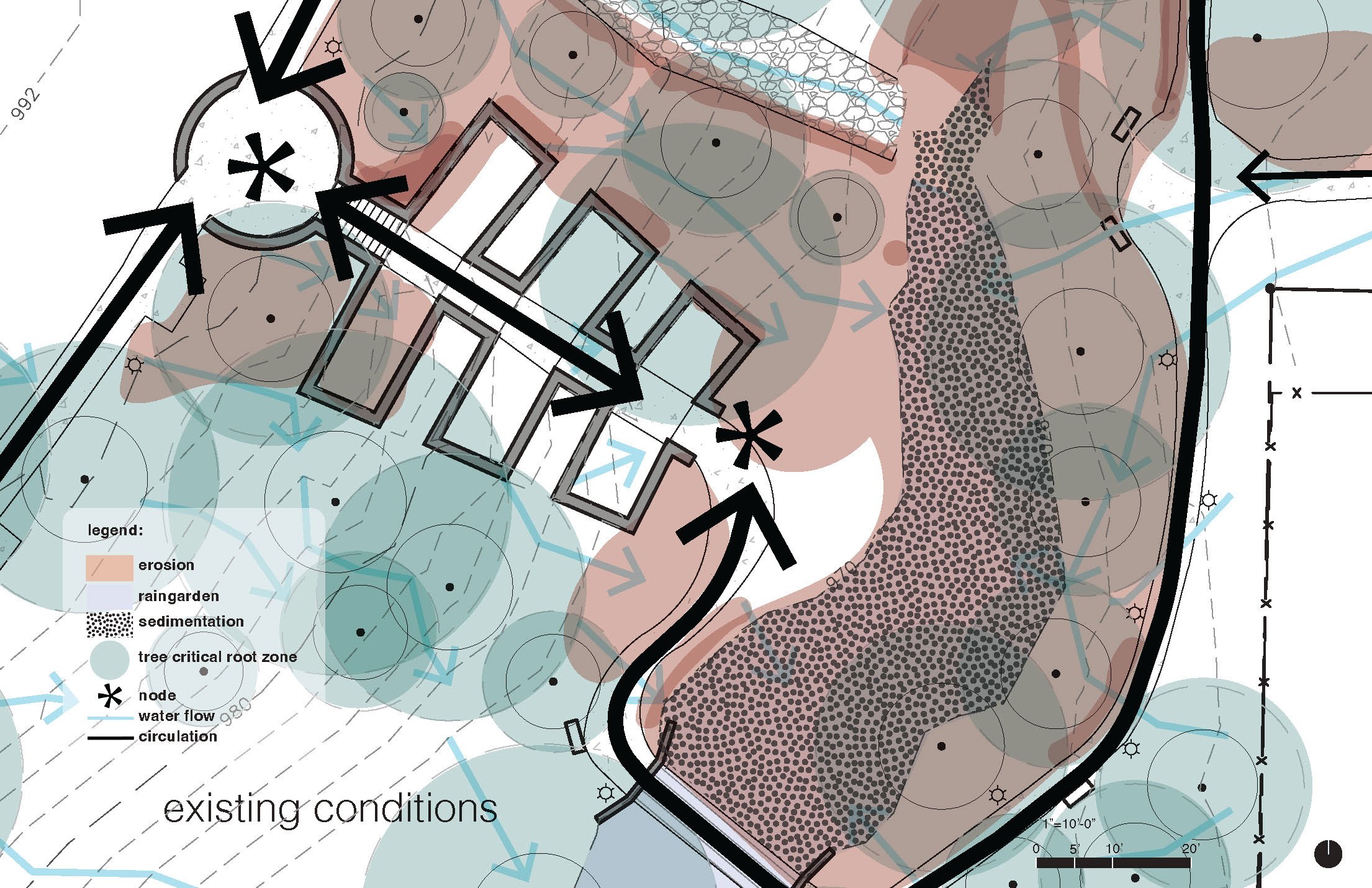
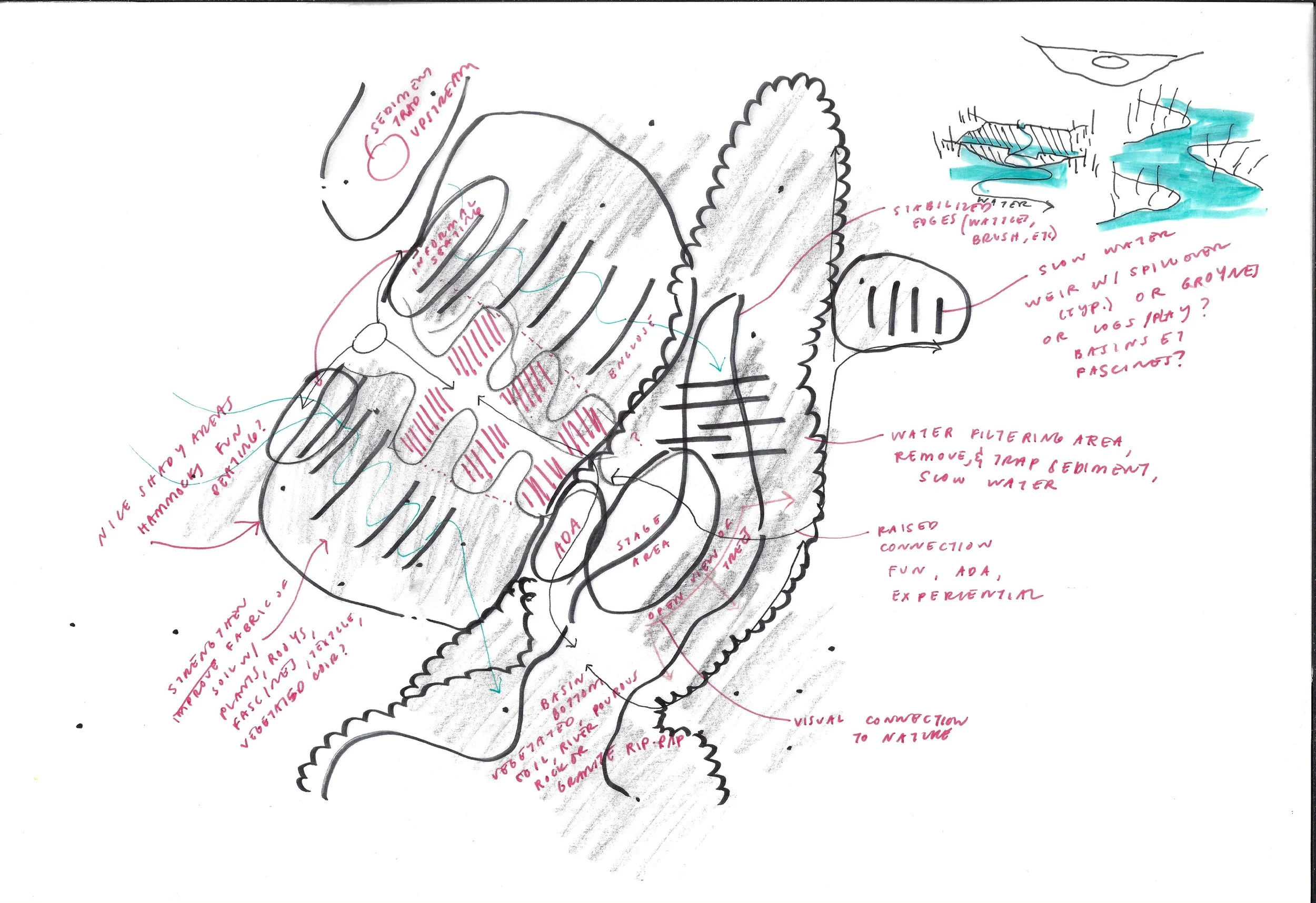
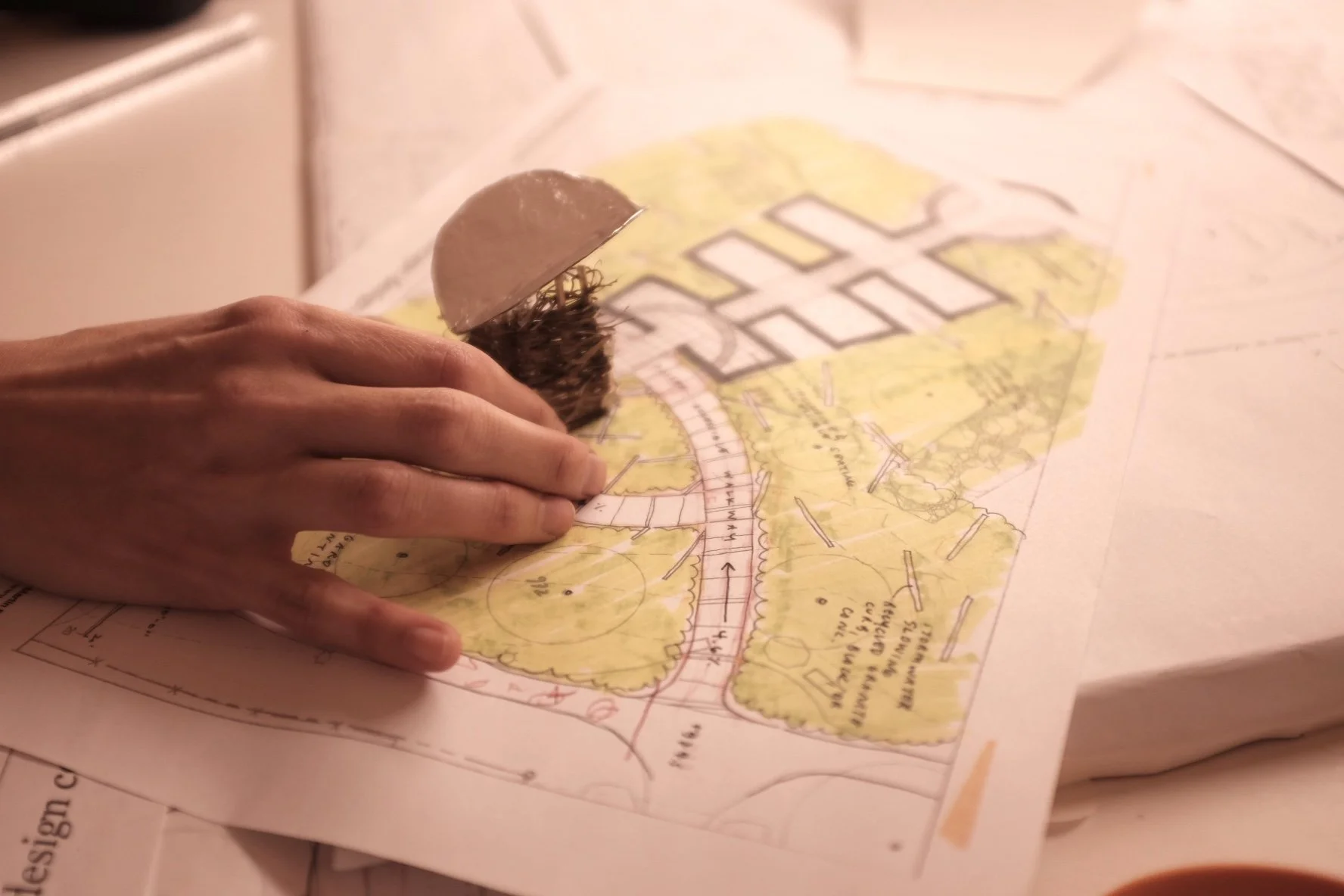
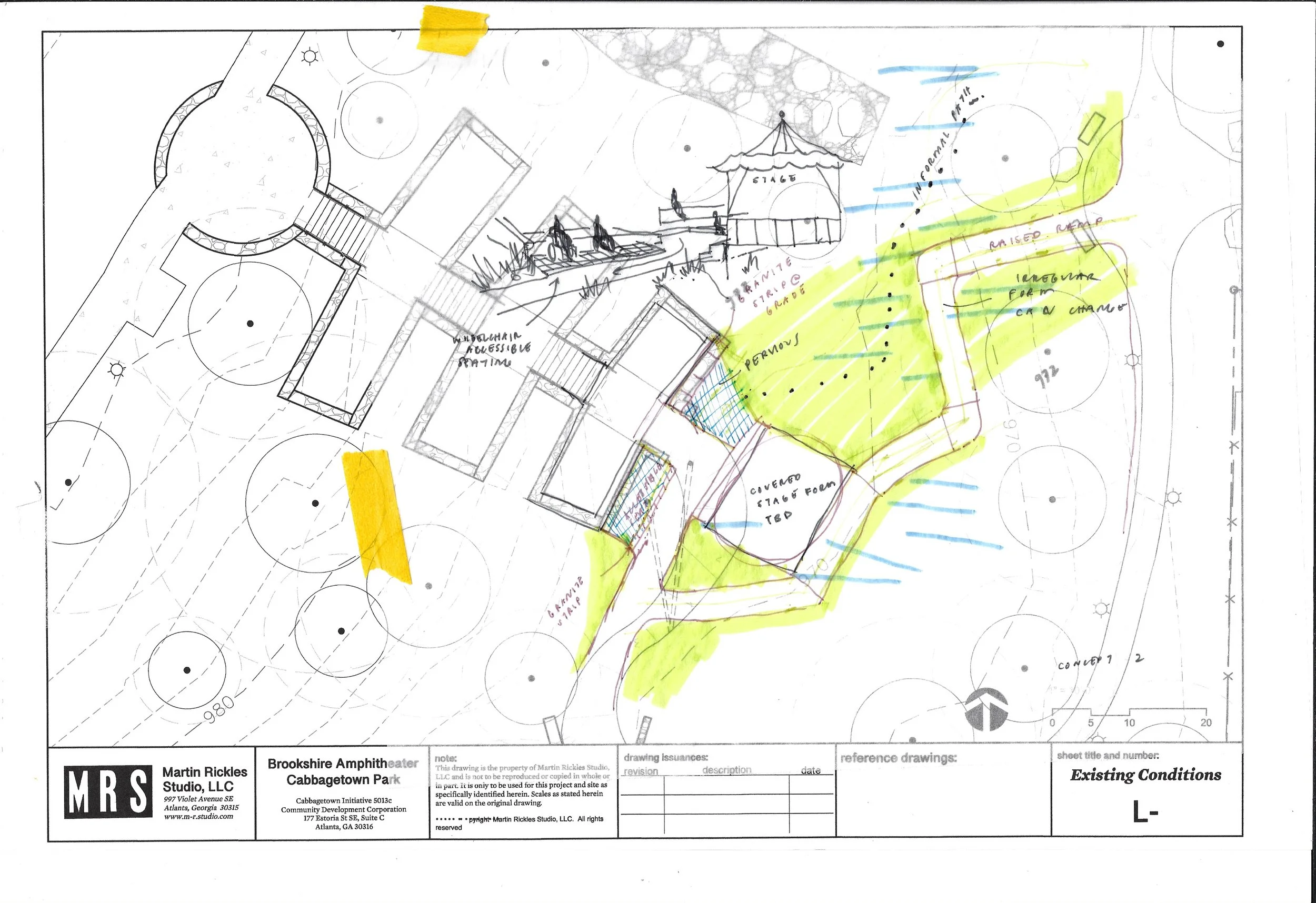
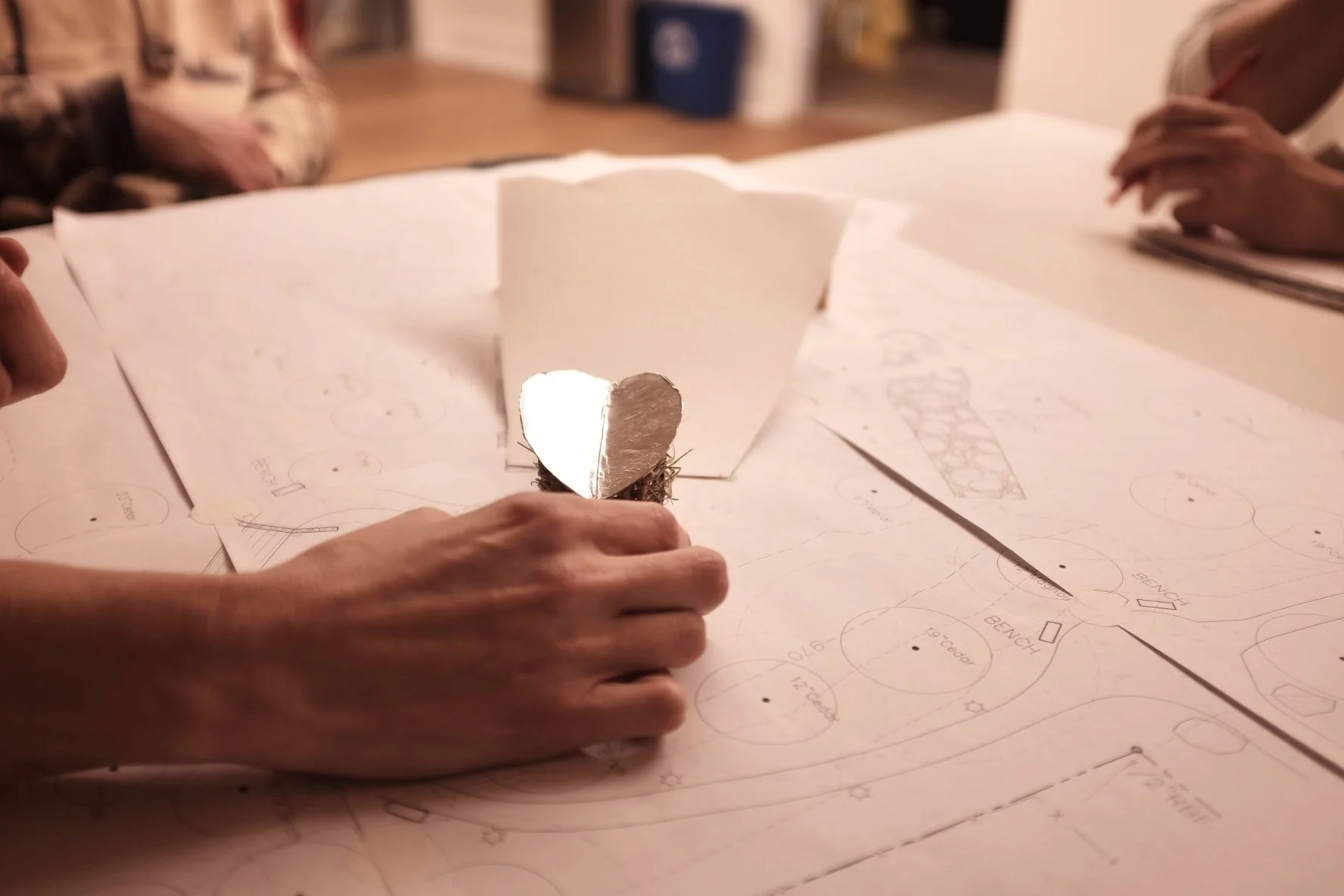
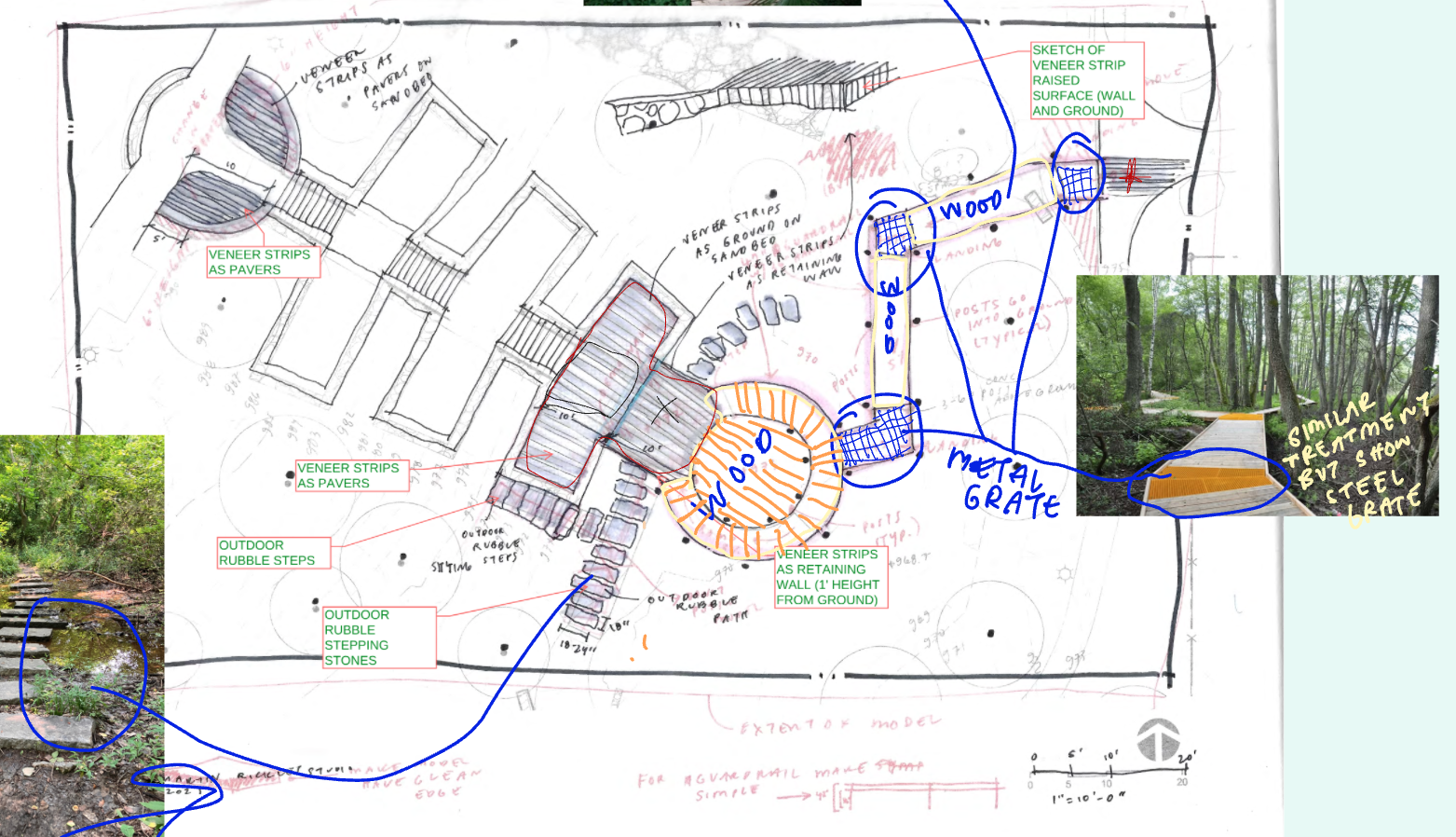
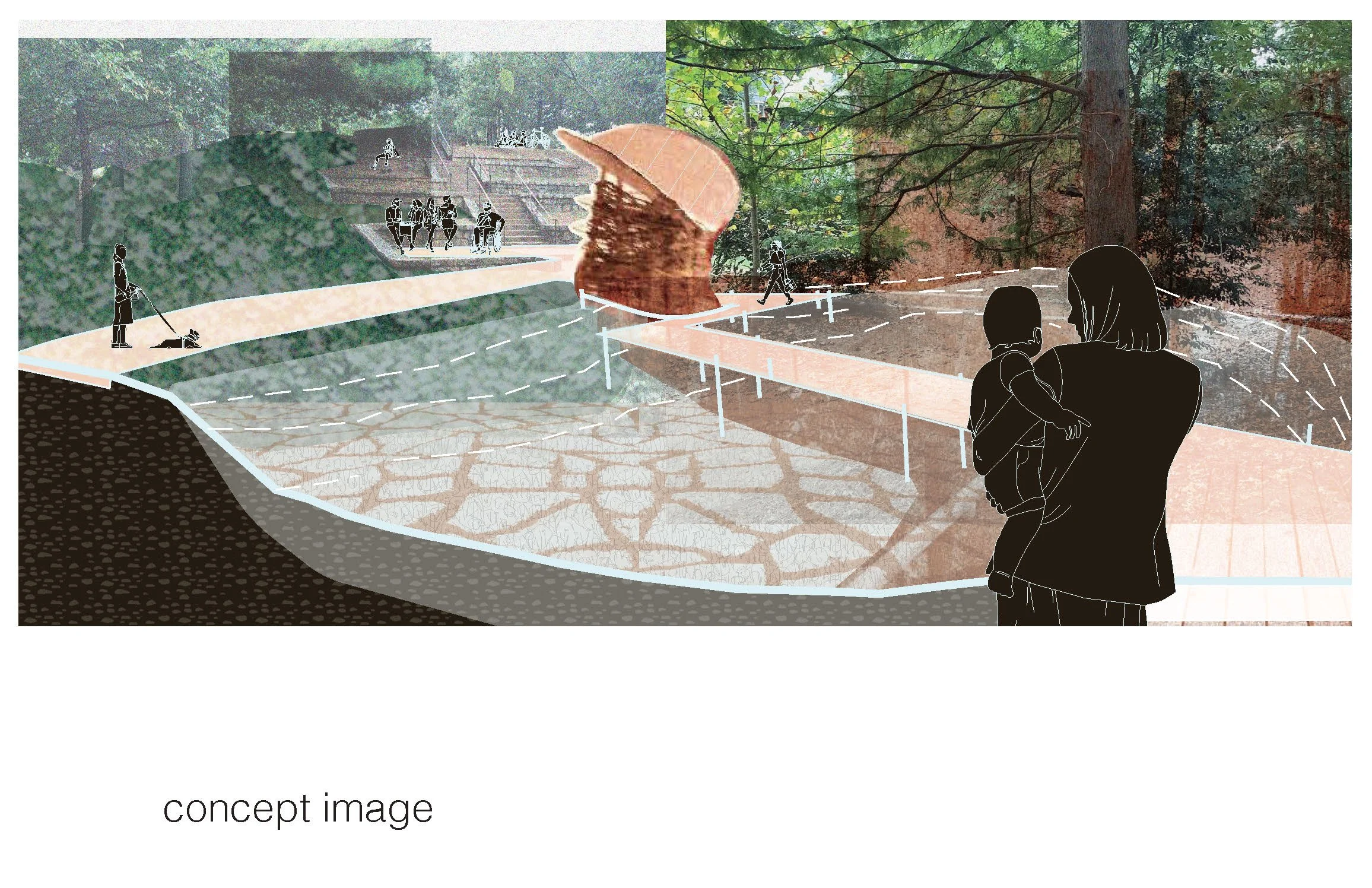
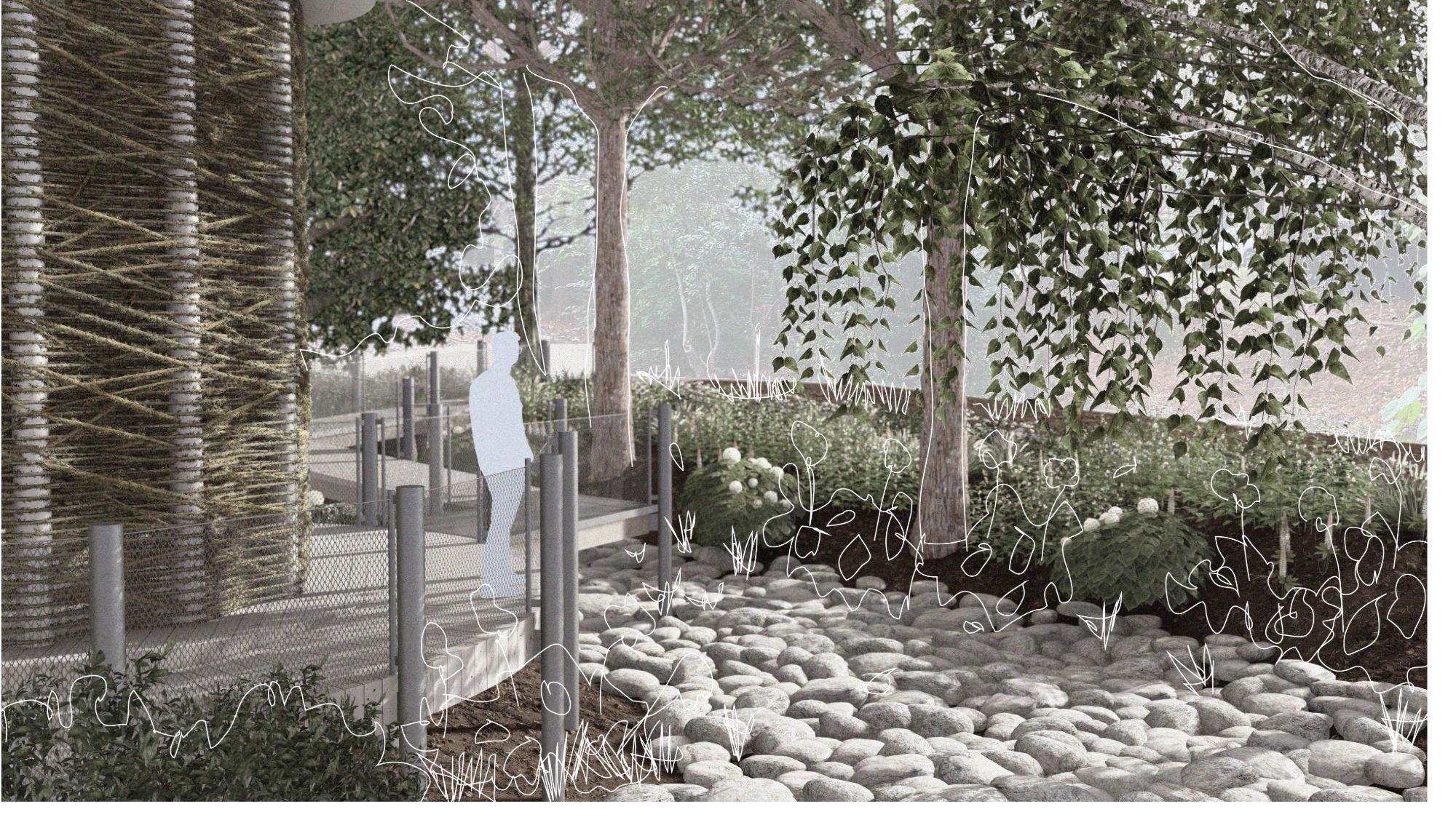
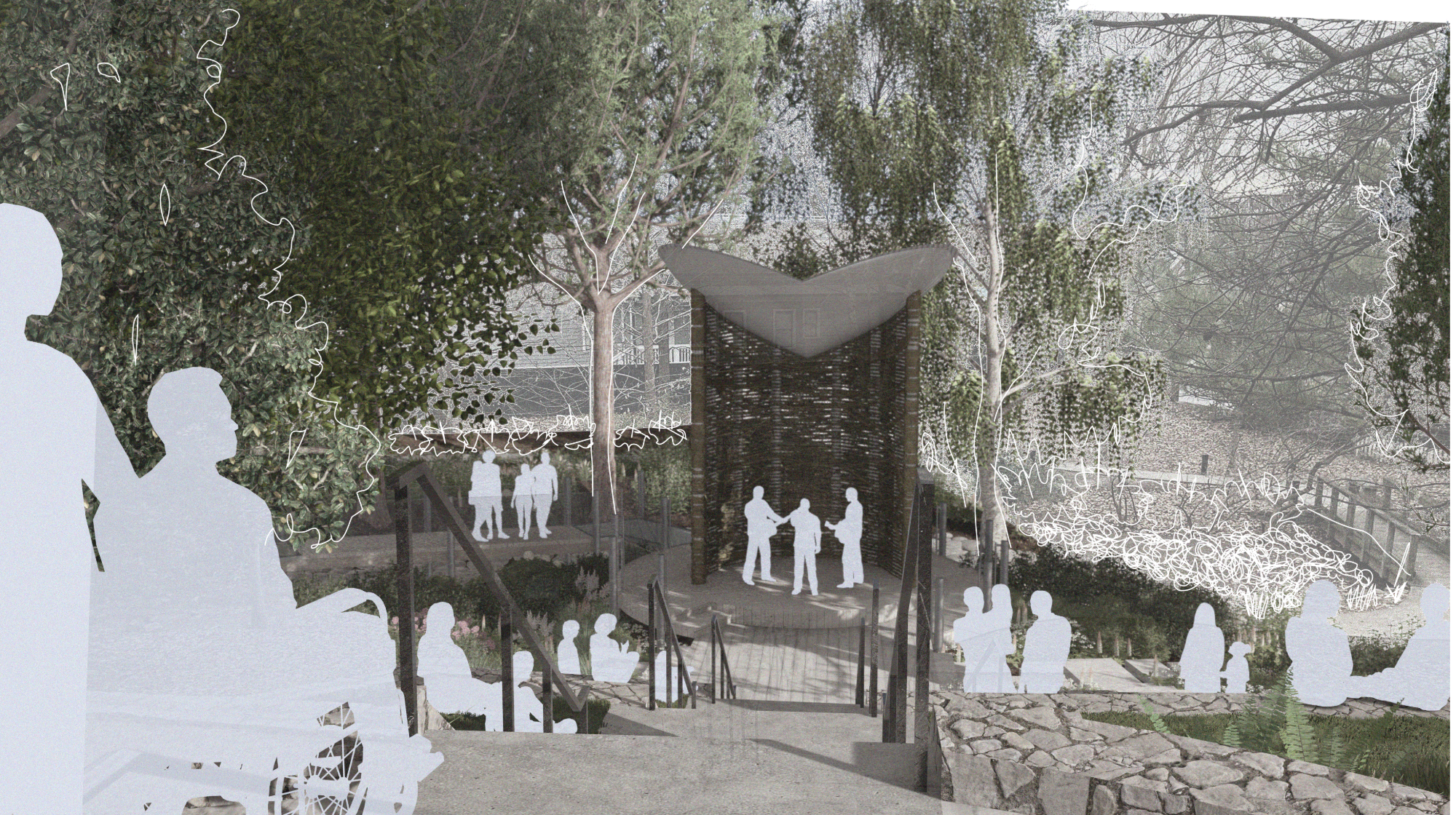
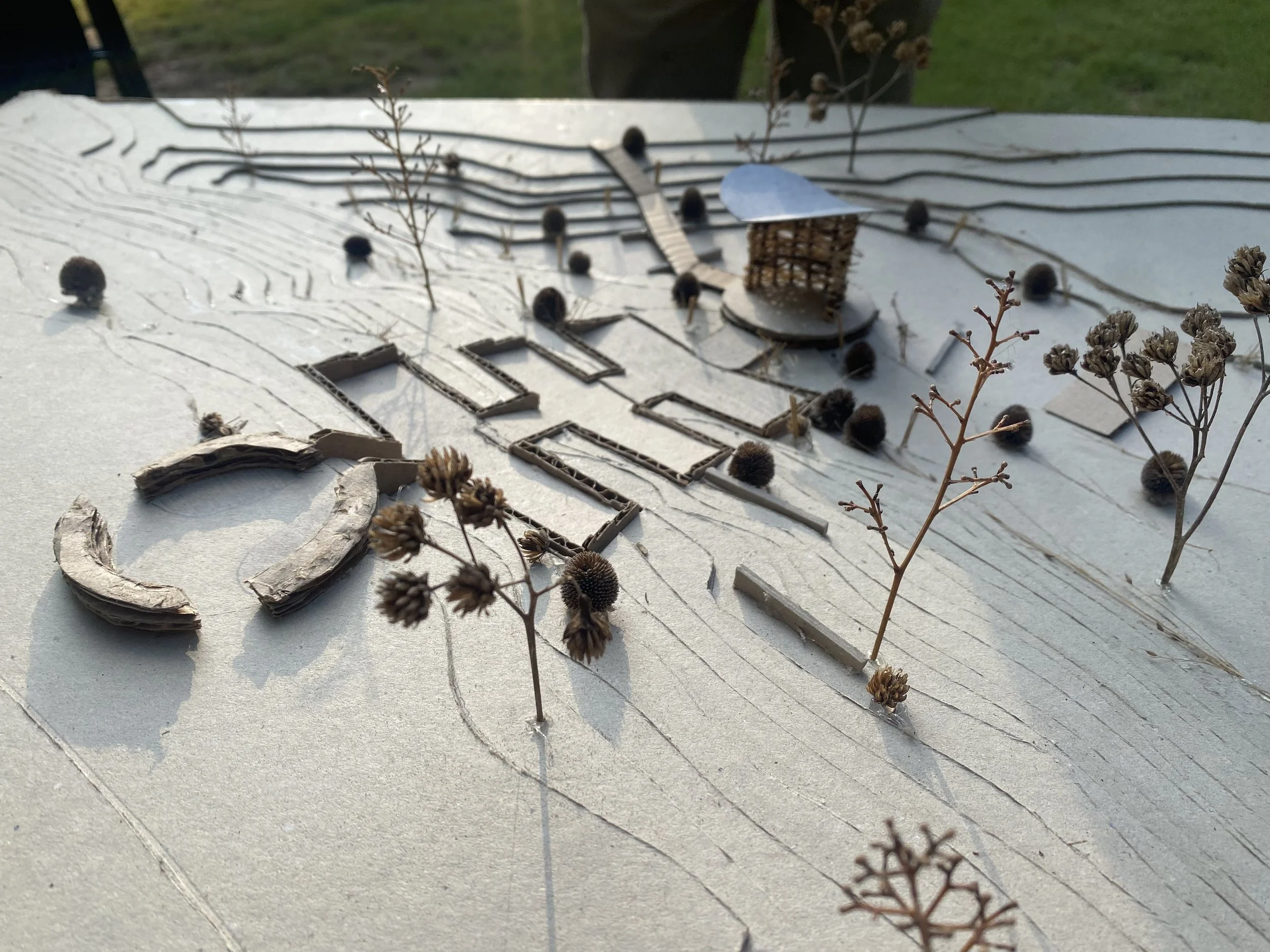
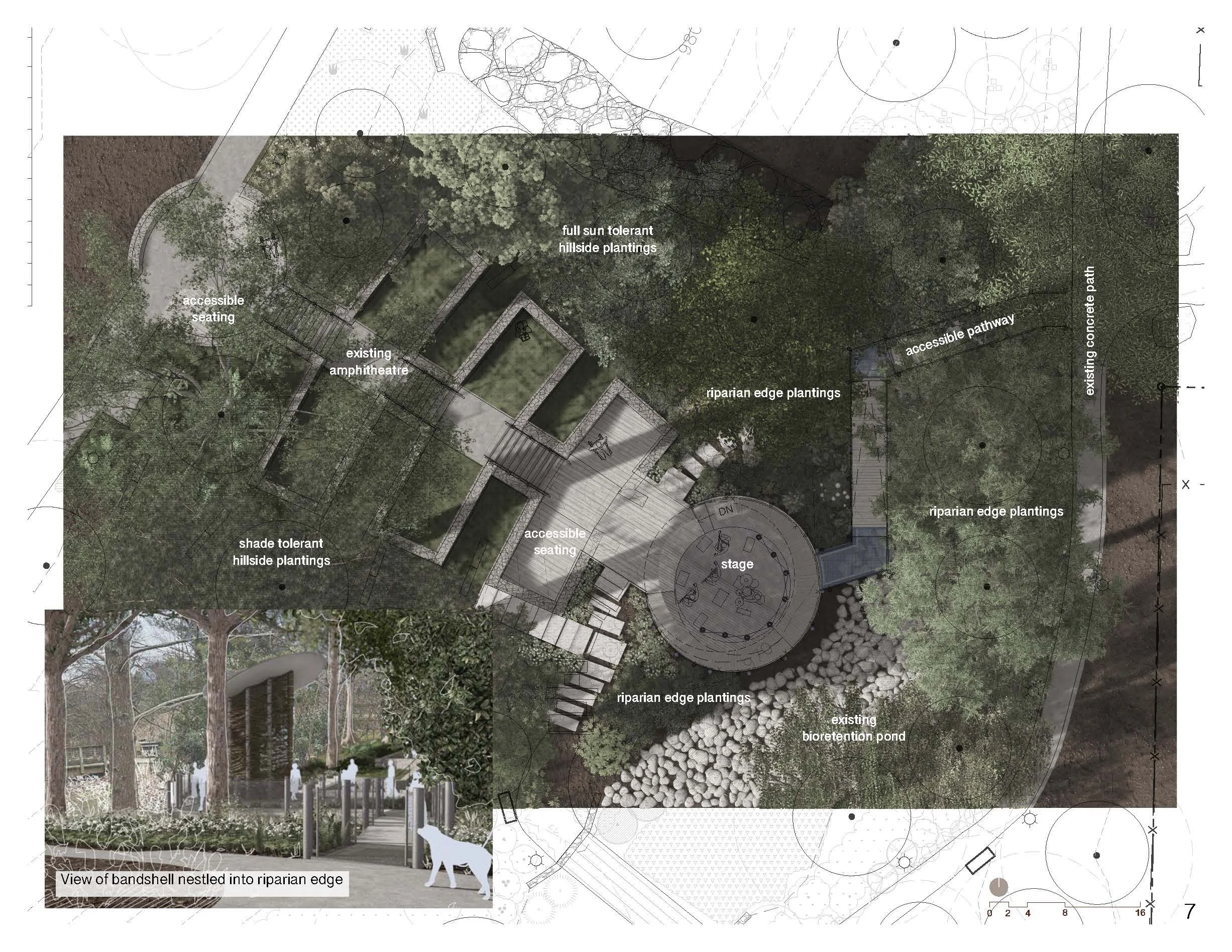
In 2024 our studio was commissioned to design this performance area– including solutions for site erosion and accessibility. The stage is situated at the bottom of the amphitheater, stitched into the edge of a rain garden/stormwater basin by a gentle pathway traversing the basin. Appalachian heritage skills are deployed through the communal weaving of the stage surround from harvested kudzu vine (an aggressive invasive species), integrating the new structure into its naturalized setting. The performance area is a physical and ephemeral medium– a threshold which physically connects the community and conjures the ideals and values that shaped Cabbagetown’s earlier residents.
A stage that disappears into the trees
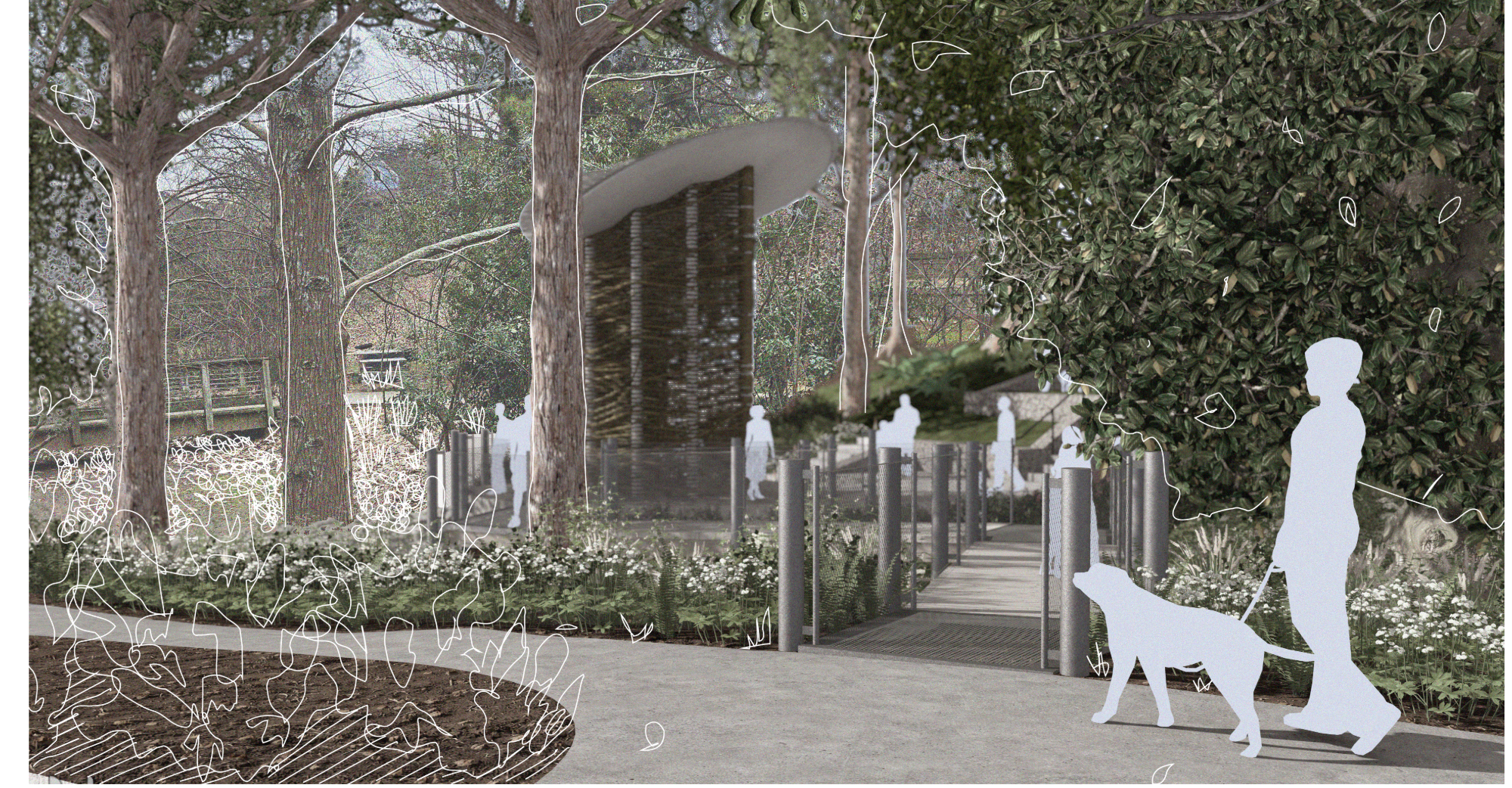
The bandshell was designed to project sound toward the audience against a backdrop of cypress, pines, and oaks. A circular roof (or as our client John says, “a conical butterfly”) cladded in wood floats atop a slightly offset circular stage made of sustainable native timber. Steel columns, that will one day be wrapped in woven dried kudzu vines, suspend the roof angled toward the hillside seating.
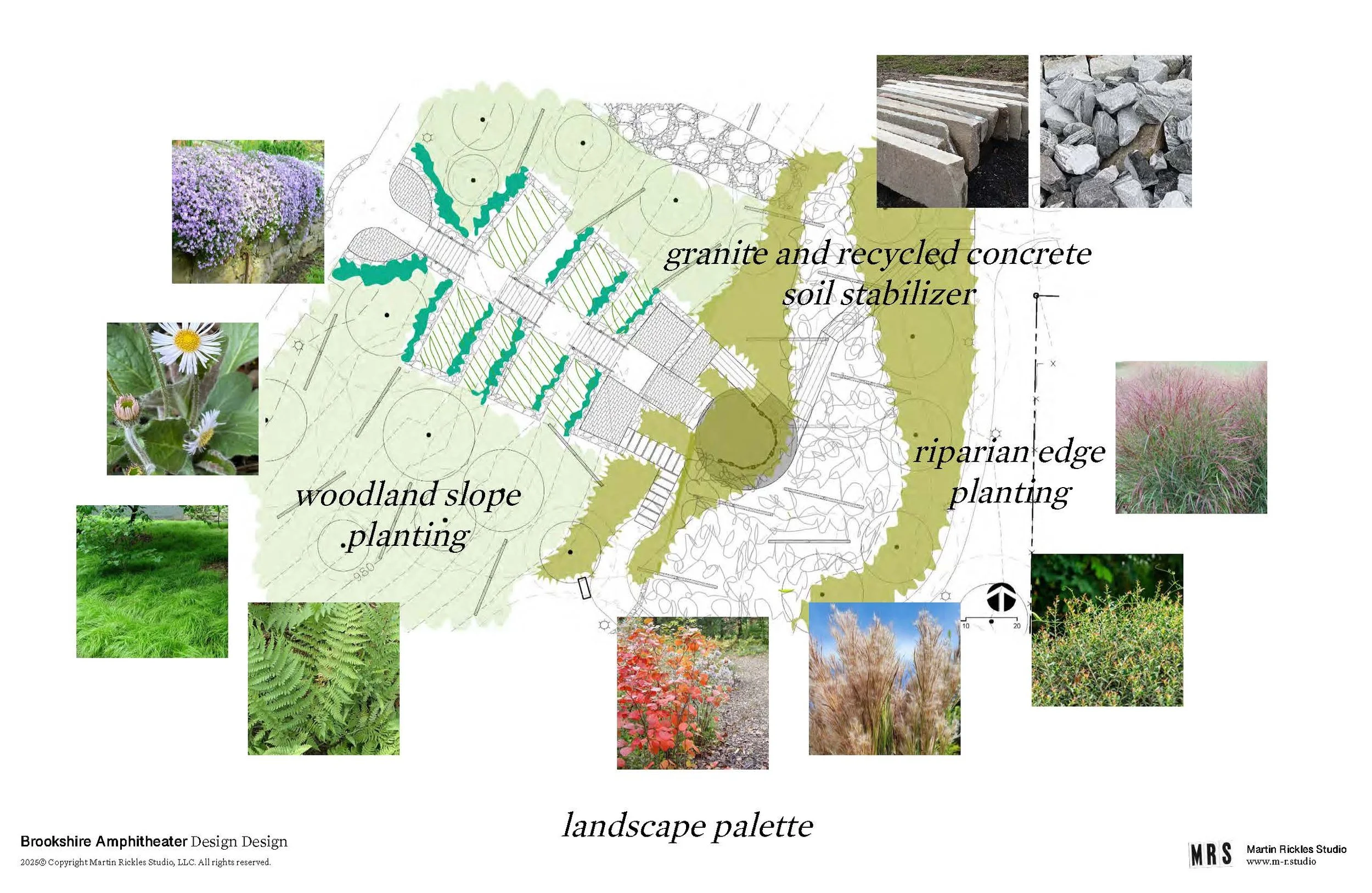
Where structure was needed we leaned into materials that blend into the woods: steel, wood, granite, and concrete (granite + water + sand).
Accessibility and the Amphitheatre
Visitors on wheels will now be able to access the tiered seating area and the elevated stage. The first tier of the amphitheater is expanding and transitioning from eroding soil to granite pavers. Like a broad catwalk, the pavers will bridge toward the stage and connect to a new concrete path. Pieces of the former (non-accessible) walk will be sandwiched into the new pour like a terrazzo. Mini-chainlink mesh, at railing height, wraps the stage as an almost invisible (like a fogged glass) protective sheet between the basin and performance platform.
Green Infrastructure
Advocating on the Client’s behalf and for the ecological health of the park, MRS worked with ATLParks to design a much needed upgrade to the bioretention area. ATLParks modified the raingarden’s soil to allow for infiltration. This basin absorbs a larger stormwater system that provides critical green infrastructure throughout the park. Our bandshell floats over the floodable area, allowing the amphitheatre and this critical neighborhood resource to coexist.
Kudzu and Appalachian Heritage Skills
the plant that ate the south, low carbon material, how to embrace a nuisance?
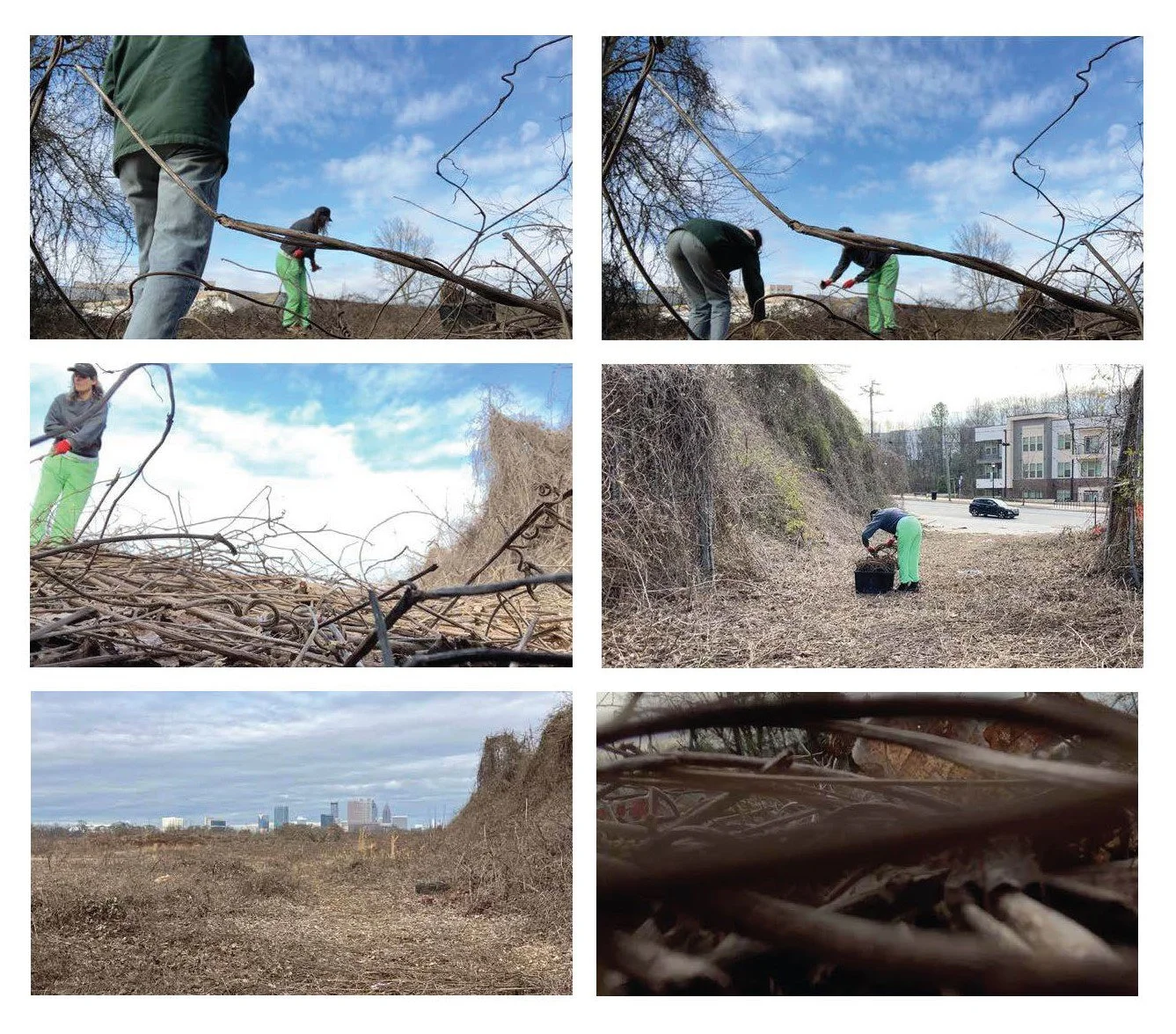
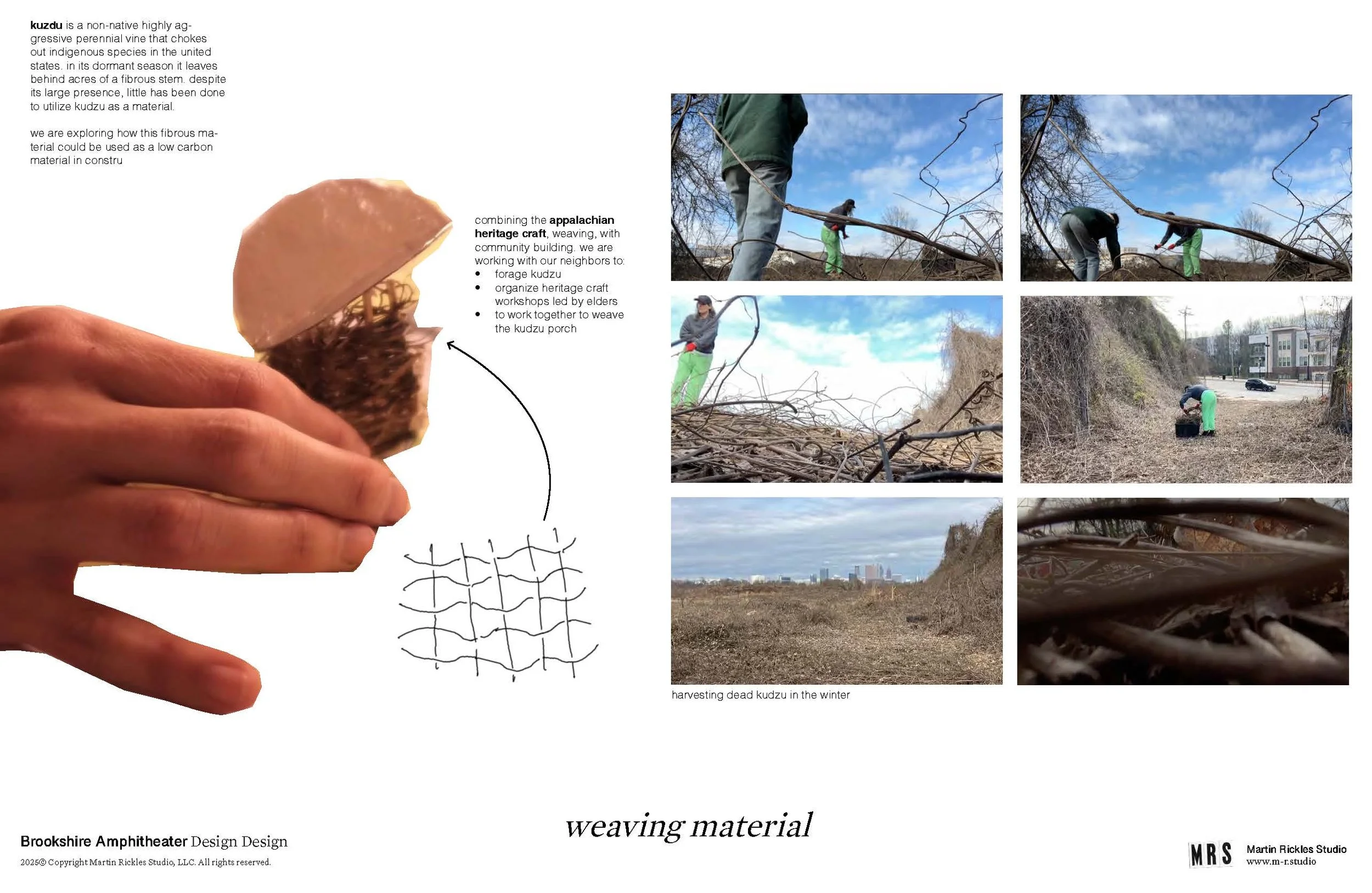
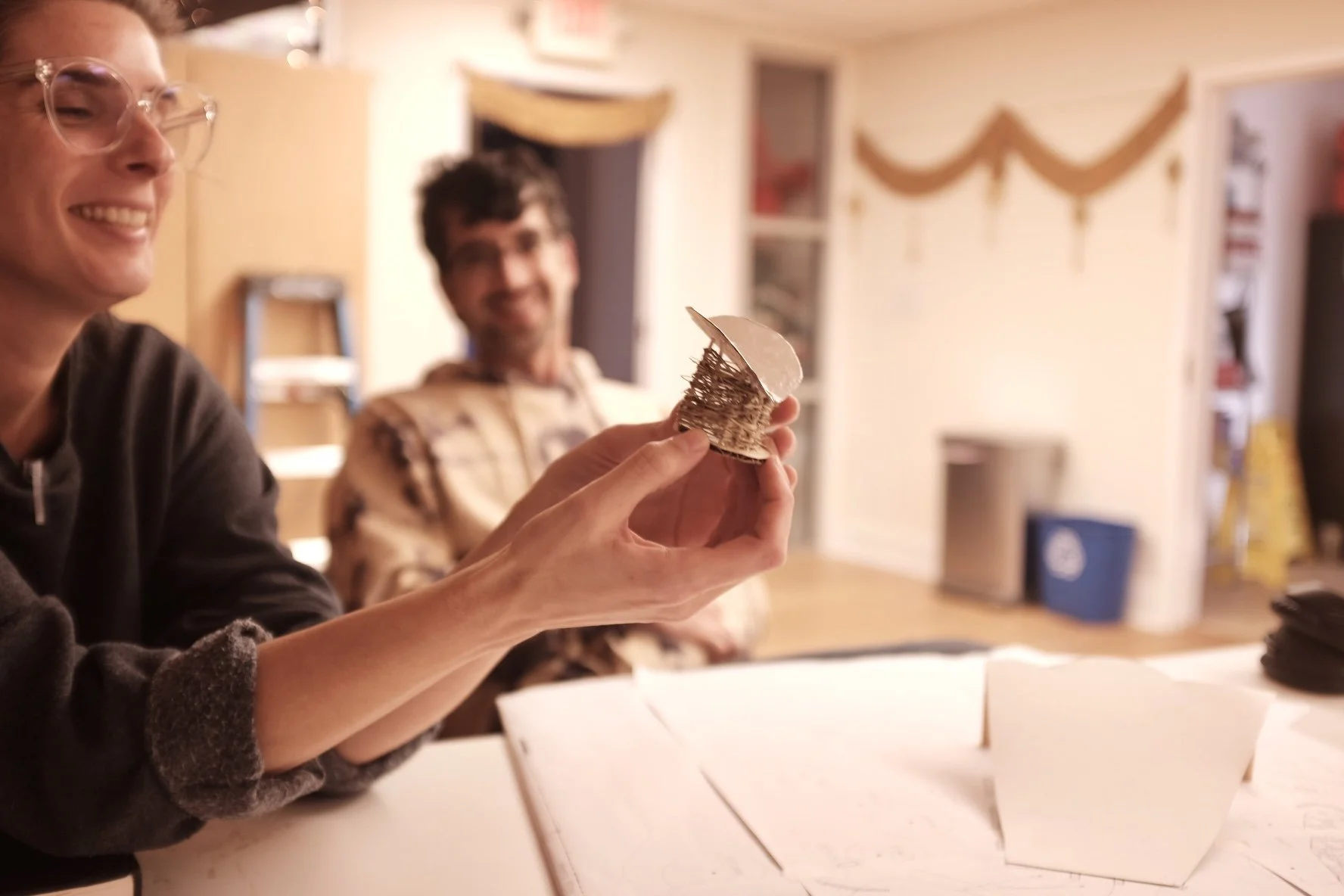
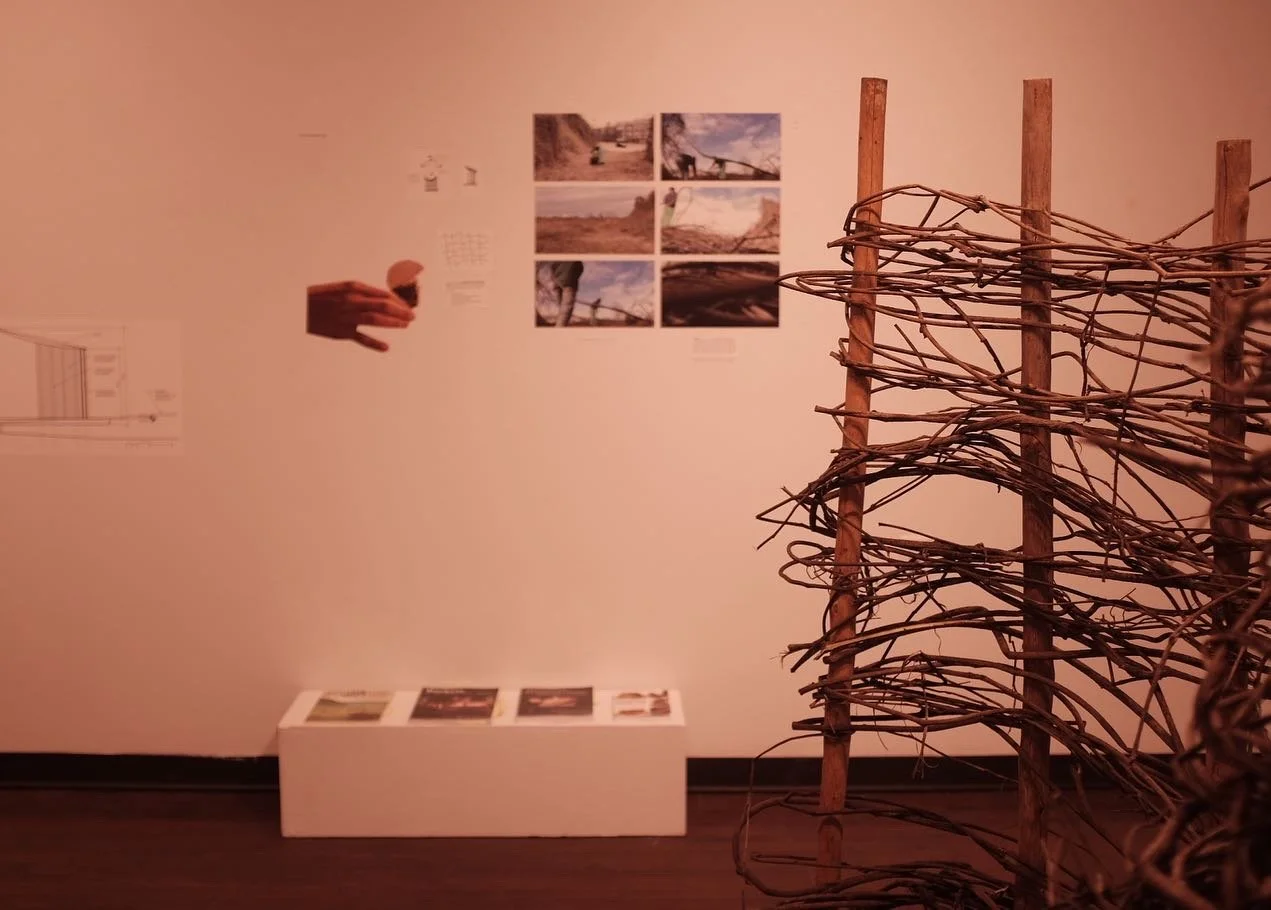
Kuzdu is a non-native highly aggressive perennial vine that chokes out indigenous species in the United States. In its dormant season it leaves behind acres of a fibrous stem. Despite its large presence, little has been done to utilize kudzu as a material. We are exploring how this fibrous material could be used as a low carbon material in construction.
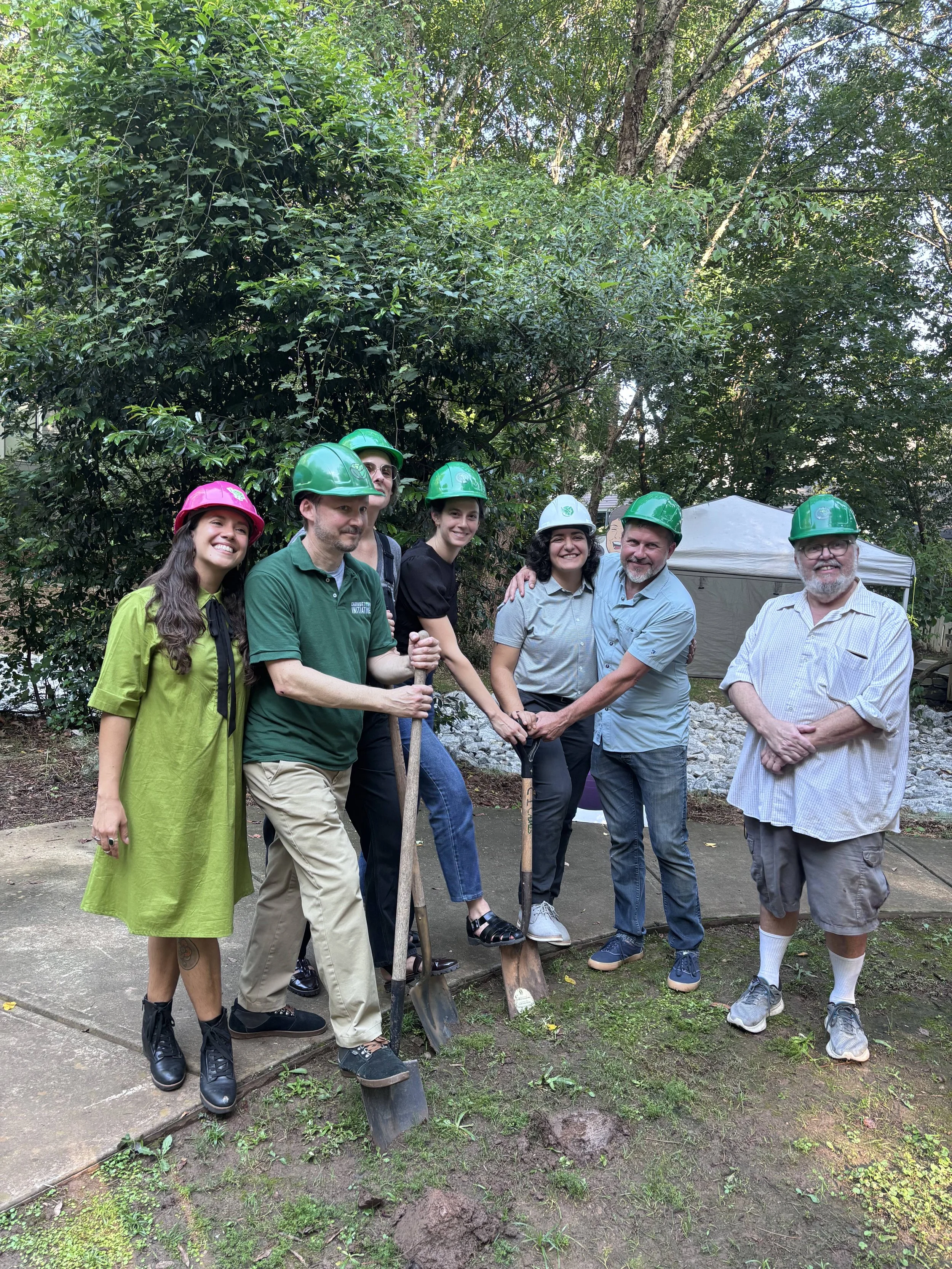
Appalachian heritage skills will be embodied through the oncoming communal weaving of the stage surround from harvested kudzu vine, integrating the new structure into its naturalized setting.
Community Ecology
Coyotes, owls, squirrels, and hawks are common visitors in this urban green space; the community porch is located in a flooding basin.